
"Uganda coffee production"
2000 article(s) found

A brief introduction to the cultivation of fresh-flavored Ugandan boutique coffee beans, geographical location, climate and altitude
Ugandan coffee is mainly exported to the European Union, of which Germany, Italy and other countries are the largest buyers of coffee. Uganda is the country of origin of coffee grown in Robusta, but commercial cultivation of Arabica species here did not begin until early 1900. Today, there are still a large number of wild robusta coffee trees in Uganda, which is rare in cities in the world. As a landlocked country, Uganda
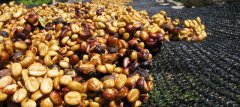
Wearing Uganda, the suitable climate makes it the main producing area of Robart coffee beans in the world.
In Uganda (Uganda), Arabica coffee beans account for only 10 per cent of the country's total coffee production, but it is enough to attract attention. Uganda's best coffee is mainly produced in the mountains of Elgon and Bugisu along the Kenyan border in the north and Ruwensori in the west, and is available for export in January or February of each year. Red

Introduction of Uganda Coffee grading Uganda Manor and description of its Flavor characteristics
Uganda, located at the source of the Nile, is a landlocked country in Africa that does not rely on the sea. Although Uganda has a long history of producing coffee like other East African countries, the quality of coffee has never been improved because of the war caused by ethnic antagonism. Most of the good coffee is grown in areas adjacent to Kenya, and some good coffee beans are shipped to Kenya to be sold as Kenyan coffee until the war stopped 15 years ago.

Detailed description of AA Flavor Evaluation in Bugisu, Uganda
Professional barista communication please pay attention to the coffee workshop (Wechat official account cafe_style) [product name] Bugisu AA (Bugisu AA) [origin] Uganda (Uganda) [treatment] washing [roasting] recommended baking degree: medium roasting [cup review] the lemon aroma under shallow baking disappears during deep baking and is replaced by a slightly bitter and sweet chocolate biscuit

Flavor description of Ugandan Kerry Fine Coffee introduction of raw beans instead of taste
Uganda Kerry boutique coffee flavor description raw beans instead of taste Uganda is a landlocked country in eastern Africa, across the equator, bordering Kenya to the east, Tanzania and Rwanda to the south, the Democratic Republic of the Congo to the west and Sudan to the north. Most of the territory is located in the Central African Plateau, with lakes, with an average elevation of 1000,000,000 meters above sea level. There are many lakes and plateaus in the mountains, which are known as the water villages of the plateau. West of the Great Rift Valley of East Africa

Fresh Taste Uganda Coffee Flavor Description Features Origin Grind Fine Coffee Taste Introduction
Later, when ships replaced sailboats, people drank fresher coffee beans because of shorter delivery times. But people accustomed to old beans are not used to this fresh taste, so they desperately pursue old Java coffee, so that the Indonesian government and some businessmen deliberately store fresh beans in warehouses for one to two years before selling them to consumers. In fact, aged Java beans are more common than fresh beans.

Introduction of Ugandan coffee beans with mild climate and suitable for growing coffee
Uganda leads Africa in coffee production, accounting for more than 70% of its total exports. In the 1960s, Ugandan coffee production remained at 3.5 million bags a year. By the mid-1980s, coffee production had dropped to 2.5 million bags a year, mainly for political reasons. But now coffee production is on the rise again, currently about 3 million bags a year. Mainly exported to the European Union, including Germany and Italy

Uganda Coffee Bean Flavor Taste Manor Introduction Uganda Fine Coffee Features
Mbale on Mount Elgon to the east and other producing areas near the border with the Democratic Republic of the Congo to the west are known as Wugar. Officially listed grades are Oaganic (organic), Bugisu AA, Bugisu A, Bugisu B, Bugisu PB, Wugar, Drugar and others not listed. To find a good Ugandan coffee, you must first identify Bugisu AA, A

A brief introduction to the history and culture of the origin and development of fresh-flavored Ugandan boutique coffee beans
Most of Uganda is located in the Central African Plateau, with lakes, with an average elevation of 1000 mi 1200 meters. There are many lakes and plateaus in the mountains, which are known as the water villages of the plateau. The western branch of the East African Rift Valley runs through the western border, with many rivers and lakes at the bottom of the valley. Uganda has a great Victoria lake, coupled with the high mountains, which makes Uganda a mild climate suitable for growing coffee, although it spans both sides of the equator. Right and wrong in Uganda

A brief introduction to the history and culture of the origin and development of plain and mild Ugandan boutique coffee beans
Uganda is the country of origin of coffee grown in Robusta, but commercial cultivation of Arabica species here did not begin until early 1900. Today, there are still a large number of wild robusta coffee trees in Uganda, which is rare in cities in the world. As a landlocked country, the large coffee cultivation in Uganda is often interplanted, where coffee trees are mixed with food crops and rubber trees.
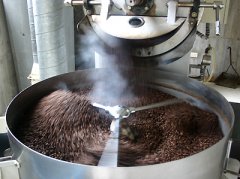
A brief introduction to the History and Culture of the Origin and Development of Ugandan Fine Coffee beans
Uganda Organic Bugisu producing country: Uganda Grade: HB growing area: Elgon, Mbalai Brand: organic Bugisu treatment method: wet treatment appearance: 1.8dBash 300grgrgrere 16-18SCR Variety: unknown later when steamships replaced sailboats, people drank relatively fresh coffee beans due to shorter shipping time. But people who are used to drinking Chen Dou are not used to it.

The decline in coffee production in Kenya lags behind Uganda and Ethiopia in 2019.
Professional coffee knowledge exchange more coffee bean information Please follow Coffee Workshop (Wechat official account cafe_style) International Coffee Organization data show that as of 1990, Kenya was synchronized with Uganda and Ethiopia in coffee production, however, from the early 1990s to the 2010 Coffee 11 harvest year, Kenya's coffee acreage decreased by 35%.

High-quality and pollution-free Ugandan coffee introduces boutique coffee
[Uganda (Uganda)] on the western slope of the Egon Mountains (Mr. Elgon) near the Kenyan border in the east, a very good Arabica bean, called buckyasu (Bugisu or Bugishu), is produced. The flavor is similar to that of Kenya, but the texture is thinner. In order to improve the quality and reduce the cost of coffee, Uganda cancelled the Coffee Management Commission (Coffee Marketing Boar) in November 1990.

The flavor and taste of Ugandan coffee beans the characteristics of the manor producing area introduce the fine coffee beans of Uganda
Ugandan coffee is mainly exported to the European Union, of which Germany, Italy and other countries are the largest buyers of coffee. The quality of Ugandan coffee: Bujisu Bugisu AA (only 4% of the country's total production) Bujisu Bugisu A Vago Wugar A (all of the above are water washing treatment) and a small amount of sun-dried bean beads Drugar Bugisu Bugisu AA in which AA said

African Coffee Uganda Coffee production area Uganda Coffee treatment & hand-made Ugandan coffee flavor
Professional coffee knowledge exchange more coffee bean information please follow coffee workshop (Wechat official account cafe_style) Ugandan coffee is almost unheard of in the boutique coffee industry. This country has always been dominated by the cultivation of Robusta. In recent years, with the vigorous development of coffee production, Uganda has also begun to grow Arabica coffee beans, and the local government has also set up to manage coffee cultivation.

Introduction to the production area of Ugandan Coffee Flavor Grinding Calibration by Taste treatment method
Uganda coffee flavor grinding scale varieties taste treatment grinding scale production area is located between the east and west branches of the East African Rift Valley, gently tilting from west to middle, low and flat in the south. Margarita peak is 5109 meters above sea level, which is the highest in the country. There are many rivers and lakes and a large water area, so Uganda is known as a plateau water village and a pearl in East Africa. Lake Victoria is the second largest freshwater lake in the world and Africa.
A brief introduction to the flavor, taste and aroma characteristics of fresh Ugandan boutique coffee beans
This coffee is produced in the Mount Elgonne region of Uganda. Balanced acidity and rich oil between 1600 and 1900 meters above sea level are the characteristics of this coffee. It tastes mild and simple, with a papaya flavor. Dry aroma (1-5): 3.2 wet aroma (1-5): 3.4 acidity (brightness) (1-10): 8 taste (hierarchy) (1-10): 8.5 taste (alcohol thickness)

Introduction of Robert's Coffee Bean in Uganda to the mountainous areas of Ruwensori in the west
Ugandan coffee is mainly exported to the European Union, of which Germany, Italy and other countries are the largest buyers of coffee. The quality of Ugandan coffee: Bujisu Bugisu AA (only 4% of the country's total production) Bujisu Bugisu A Vago Wugar A (all of the above are water washing treatment) and a small amount of sun-dried bean beads Drugar Bugisu Bugisu AA in which AA said

Uganda handmade coffee recommended Uganda handmade coffee how to drink Ugandan handmade coffee bitter
For more information on coffee beans, follow the coffee workshop (official Wechat account cafe_style) for many, Uganda may not be the first country to think of high-quality Arabica coffee: it is traditionally considered to be the producer of robusta coffee. In many parts of the country, however, the challenge is more about infrastructure, history and knowledge.

Uganda Coffee Flavor Taste Manor Production Features Boutique Coffee Bean Introduction
In the late 1920s, Britain carried out constitutional reforms aimed at autonomy in Uganda. At the end of 1931, three major political parties were formed in Uganda: Uganda People's Congress, Democratic Party and Kabakayaka Party. In March 1931, Uganda held its first general election, which was won by the Democratic Party and Benedik Tokiwanuka was appointed Chief Minister. March 1932 Uganda becomes self-governing and Kiwanuka is in charge.